


- This event has passed.
冉茂芹 油畫寫生 個展|光影拾歲
3 月 7 - 4 月 7
冉茂芹 油畫寫生 個展
藝術家|冉茂芹
展期|2026.03.07 – 2026.04.07
地點|阿波羅畫廊
台北市大安區忠孝東路四段218-6號A棟2樓
冉茂芹 油畫寫生 個展|光影拾歲
長期以風景和肖像畫作為創作核心,冉茂芹的繪畫實踐,並不止於對地點或景象的描繪,而是透過藝術家的視角去觀看我們所在的世界。回顧其創作歷程,1990年至2015年間,他於台灣多處地景及日本創作寫生。這些地點橫跨不同文化與自然條件,並未在展覽中被作為旅行紀錄或地域比較的對象,而是為藝術家反覆進入同一種創作狀態的不同場域。本次展覽透過許多風景作品,呈現藝術家與繪畫之間所建立的觀看方式。
對冉茂芹而言,旅行繪畫並不是為了捕捉壯麗景觀或是標誌性景點,而更接近一種「田野式」的創作行動。他堅持對景寫生時,讓自身實際置身於風景之中,在現場觀察光線、空氣、結構與時間的流動。無論是在日本河岸長時間凝視光影變化,或是在台灣田疇、城市邊緣駐足作畫,繪畫皆發生於當下。
《落日蘭嶼》以夕光中的船隻與海岸為構圖主體,畫面中略帶想像色彩的造型與柔和光線,使風景呈現出介於現實與感受之間的靜謐氛圍。
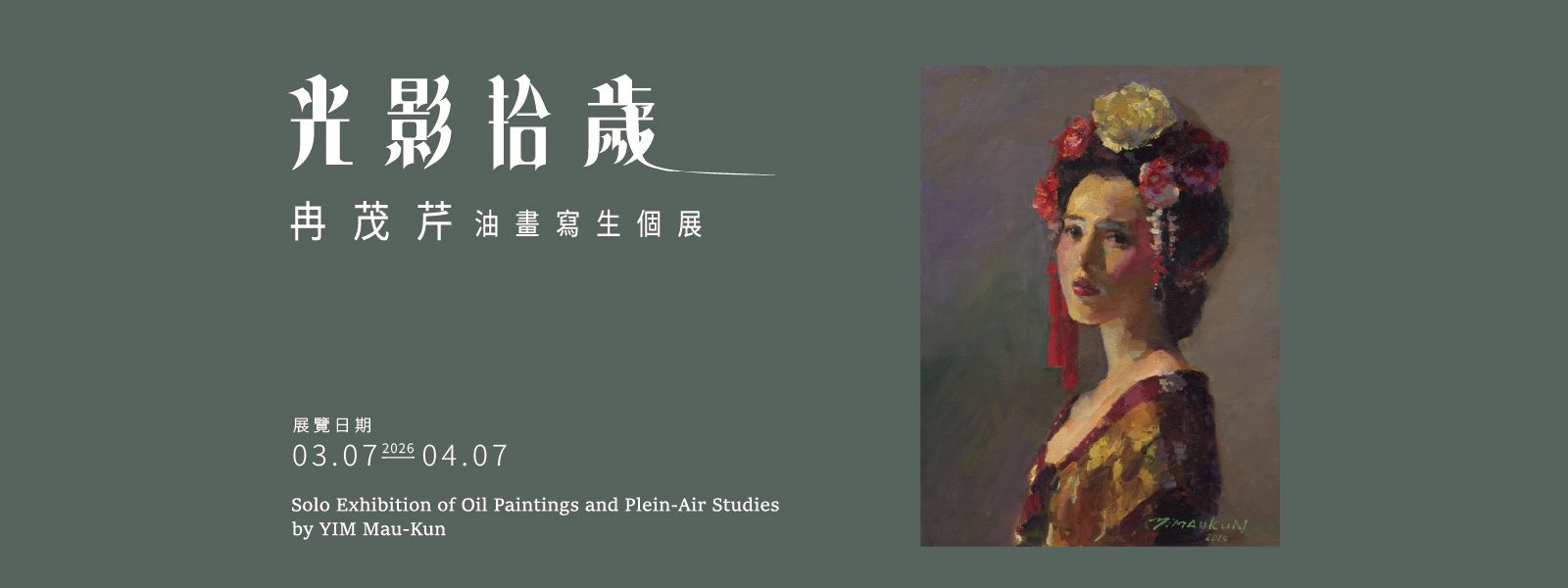
在肖像繪畫方面,冉茂芹的畫風承襲俄羅斯畫派嚴謹細膩的寫實傳統畫法,展現出紮實醇厚的功力。溫和高雅的色調運用,使畫中人物流露出一種內斂、優柔溫潤的氣質,形象清晰而非流於形式上的描摹。
值得注意的是,這些肖像多半來自不同文化背景與族群,有些是來臺的交換學生,有些則是旅途中相遇的人等等。無論膚色或文化差異,冉茂芹皆以同樣的觀看方式與創作態度,使人物形象在畫布上展現出跨越地域與文化差異的共通性。
《黔東南苗家女》描繪在結婚前的苗族少女,畫面透過服飾、色彩與姿態,呈現當地文化中蘊含的節慶氣息與生命喜悅。
《貴妃遙想》以唐代人物為創作起點,冉茂芹透過層次豐富而內斂的色彩處理,使歷史人物在畫面中呈現出兼具想像與情感重量的肖像形象。
冉茂芹並不將寫實視為單純的複製畫面,而是追求一種介於再現與轉化之間的狀態。他曾引用齊白石所言:「妙在似與不似之間,太似為媚俗,不似為欺世」,作為自身創作的核心精神。在畫面中,透過構圖的取捨、筆觸的節奏,以及顏料厚薄的層次變化,保留感受尚未定型的時間痕跡。這樣的處理,讓作品不僅描繪所見之景,更呈現一種具有生命力度的靈光。
本次展覽恰逢春季開展(2026年3月7日至4月7日),時節上的呼應,更讓展覽多了一層重啟的象徵意義。藝術家冉茂芹曾提及,前幾年的春天受疫情影響,心境容易感到鬱卒,但隨著畫展的舉辦,心情也隨之雀躍起來,這本質上就是一種心理上的重啟 。
藝術家簡歷→冉茂芹
虛擬展廳→欣賞
YIM Mau-Kun Oil Painting from Life – Solo Exhibition A Decade of Gathering Light and Shadow
Opening|Saturday, March 7, 2026, 15:00
Exhibition Dates|March 7 – April 7, 2026
Artist Talk|Saturday, March 28, 2026, 15:00
Long devoted to landscape and portrait painting as the core of his practice, Yim Mau-Kun’s work goes beyond the depiction of specific sites or scenes. His painting is an ongoing act of seeing that unfolds through movement and presence. Reviewing his artistic trajectory, from 1990 to 2015 his exhibited works encompass numerous locations across Taiwan—including Taichung, Keelung Islet, Kaohsiung, Nantou, Yilan, Longtan in Taoyuan, and the back hills of Xindian—as well as sites in Japan such as Nagaokakyō, Kyoto, Nara, Osaka, the Kōya River, and Fukuyama Botanical Garden. Though these places span diverse cultural and natural conditions, they are not presented as travel records or regional comparisons. Rather, they are treated as different fields in which the artist repeatedly enters the same creative state. Taking this as its point of departure, the exhibition brings together landscapes from multiple regions to reveal how Yim establishes a distinctive and sustained mode of looking through movement, pause, and the act of painting.
For Yim Mau-Kun, painting while traveling is not about capturing spectacular views or iconic landmarks; it is closer to a form of “fieldwork.” He insists on painting directly from life, placing his body within the landscape and observing light, air, structure, and the flow of time on site. Whether lingering along riverbanks in Japan to contemplate subtle shifts of light and shadow, or pausing to paint amid Taiwan’s farmlands, botanical gardens, and urban fringes, his paintings emerge in the present moment and maintain a direct, intimate relationship with their surroundings.
Sunset at Lanyu centers on boats and coastline bathed in evening light. The slightly imagined forms and gentle illumination create a tranquil atmosphere suspended between reality and perception. In portraiture, Yim Mau-Kun’s style inherits the rigorous and refined realism of the Russian academic tradition, demonstrating a solid and mature command of form. His use of restrained, elegant color imbues his figures with a quiet, tender, and warm temperament—clearly defined yet never reduced to mere outward likeness.
Notably, many of these portraits depict individuals from diverse cultural and ethnic backgrounds—some exchange students visiting Taiwan, others people encountered during the artist’s travels. Regardless of differences in skin color or cultural origin, Yim approaches each subject with the same distance of observation and creative attitude, allowing the figures to embody a cultural presence that transcends geography. Miao Girl from Southeast Guizhou portrays a Miao girl before marriage; through costume, color, and posture, the painting conveys the festive spirit and vitality embedded in local culture. Consort’s Reverie takes a figure from the Tang dynasty as its point of departure; through layered yet restrained color treatment, Yim renders a historical figure imbued with both imaginative resonance and emotional weight.
Yim Mau-Kun does not regard realism as the faithful replication of detail, but as a pursuit of a state of seeing that lies between representation and transformation. He has often cited Qi Baishi’s words—“The marvel lies between likeness and unlikeness; too much likeness is vulgar, too little is deceitful”—as a guiding principle of his practice. Through compositional choices, the rhythm of brushwork, and variations in paint thickness, his landscapes remain poised in this “between,” preserving traces of time before sensation fully settles. Such an approach allows the works not only to depict what is seen, but also to reveal a vital, living aura.
Opening in spring, the exhibition gains an added layer of symbolic renewal through the season itself. Yim Mau-Kun has mentioned that in recent years, springtime under the shadow of the pandemic left him feeling subdued, yet the staging of exhibitions rekindled a sense of joy—a psychological reawakening at its core. This transition from melancholy to delight is vividly embodied in his decades-spanning works painted from life. The exhibition features a selection of oil paintings closely associated with spring scenery, including Spring Comes to Lishan (Jesus Church) from 1990, as well as a series capturing cherry blossoms in full bloom in Nara and Osaka, such as Under the Cherry Tree and Cherry Blossom Grove.